

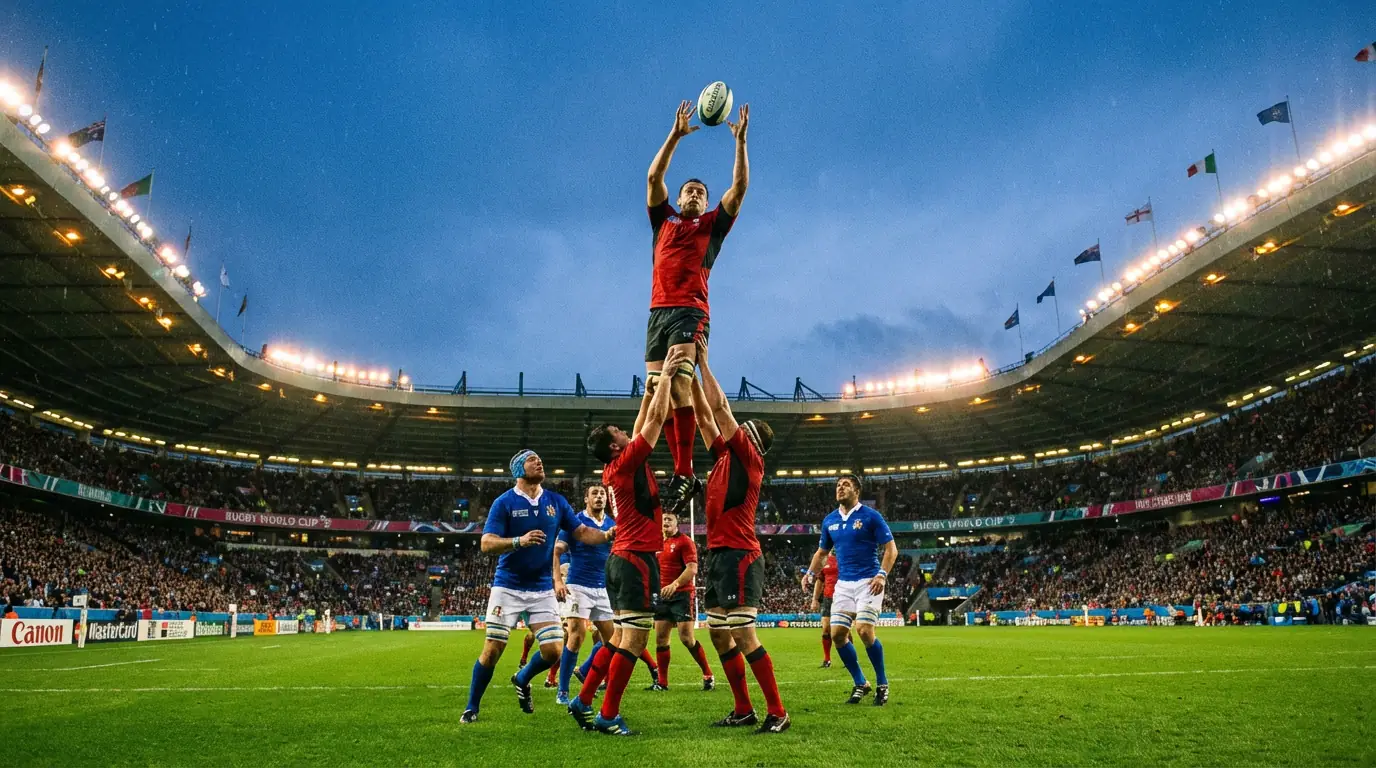
The outright winner market is the bread and butter of World Cup betting. It is the simplest wager you can place on the tournament and, paradoxically, one of the hardest to get right. You pick the team you think will lift the Webb Ellis Cup in November 2027 in Sydney, and you wait roughly seven weeks to find out whether your judgment was worth anything. The appeal is obvious: long odds, big payouts, bragging rights that last four years.
But the simplicity of the bet masks a surprisingly complex landscape. Not all bookmakers price teams equally. The gap between the best and worst available odds on a single team can represent a double-digit percentage difference in implied probability. If you are going to lock money into a futures bet months or years before kickoff, you owe it to yourself to shop around.
This comparison breaks down where the major bookmakers stand on the key contenders, identifies where value is hiding in the market, and explains why the number you see on your screen is not always the number you should accept.
Why Outright Odds Vary Between Bookmakers
Every bookmaker builds its odds using a combination of statistical models, market intelligence, and liability management. The models differ. Some shops lean heavily on Elo-based rating systems; others weight recent form or squad depth more aggressively. The result is a spread of prices that can look surprisingly wide for an event with only a handful of realistic contenders.
Liability management plays an equally important role. A bookmaker with a heavy concentration of bets on South Africa might shade the Springboks’ price down while offering slightly better value on New Zealand or France to balance their book. This is not conspiracy; it is basic risk management, and it creates opportunities for punters willing to compare across platforms.
There is also the matter of margin. The overround — the bookmaker’s built-in edge — varies by operator and market. A low-margin book might price the entire outright market at 110-115%, while a high-margin operator could sit at 125% or above. When you are betting at 125% overround, you are effectively paying a 25% tax on top of the true probabilities. Over time, that difference compounds brutally.
The Contenders and Where They Stand
South Africa enter the 2027 cycle as defending champions and holders of back-to-back titles. Most bookmakers have the Springboks priced in the +300 to +400 range, which implies roughly a 20-25% chance of winning the tournament. The variation here tends to be modest because every bookmaker recognises the Springboks’ pedigree. The question for bettors is whether the inevitable squad turnover — several key players from the 2023 vintage will be in their mid-thirties — is already priced in.
New Zealand are typically co-favourites or sit just behind South Africa. The All Blacks’ three World Cup titles and their deep talent pipeline keep them short in the market, usually between +300 and +500 depending on the book. Historically, New Zealand have been the most consistent World Cup performers, reaching at least the semi-finals in nine of ten editions since 1987, with a quarter-final exit in 2007 the sole exception. That consistency justifies a short price, though it does not guarantee value.
Australia benefit from a factor that no model fully captures: home advantage. The Wallabies won the World Cup in 1991 and 1999, and co-hosted the inaugural tournament in 1987, but have never won the trophy on home soil — the 2027 edition offers them that opportunity for the first time. Most bookmakers price them between +600 and +1000, and this is where you start to see meaningful divergence. Some operators clearly weigh the home factor more heavily than others, creating the widest spread among the top-tier contenders.
France are the perennial nearly-men, and the market knows it. Priced around +500 to +700, the French squad is packed with talent from the Top 14, and their near-miss at home in 2023 only sharpened the hunger. The variation in French odds tends to reflect differing views on whether Antoine Dupont’s generation can peak again four years later.
Ireland sit in the +800 to +1200 range at most shops, a band that reflects both their extraordinary Six Nations dominance and their equally extraordinary World Cup underperformance. The Irish have never reached a semi-final, and that record acts as a persistent drag on their price.
Second Tier: England, Scotland, and the Emerging Pack
England have been in flux since their 2019 final appearance and 2023 semi-final run, but the betting market respects their tournament pedigree. Most books place them between +1000 and +1500. England’s price is a bet on coaching stability and whether a new generation of forwards can match the set-piece dominance that has historically carried them deep into brackets.
Scotland, Fiji, and Japan occupy the long-shot tier, typically priced at +2500 and beyond. These are not serious contender prices in most cycles, but the expanded 24-team format with a Round of 16 changes the calculus slightly. More matches mean more opportunities for upsets, and upsets mean more variance in knockout outcomes. If you are hunting for a speculative flutter at triple-digit odds, the expanded format gives those bets marginally more oxygen.
The rest of the field — Argentina, Wales, Samoa, Tonga, and the qualifiers — sit at even longer odds and are functionally lottery tickets. That does not mean they are bad bets, but it does mean you need to be honest about what you are buying: a fantasy, not a probability.
How to Read an Odds Comparison Table
For punters unfamiliar with cross-platform comparison, the mechanics are straightforward. You identify the team you want to back, check the price at three or more bookmakers, and place your bet where the odds are highest. The tricky part is knowing whether a difference is meaningful.
A gap of +350 versus +400 on South Africa translates to roughly a 3% swing in implied probability. On a 100-unit stake, that is the difference between a 350-unit return and a 400-unit return. Over a lifetime of futures betting, those margins are enormous. Serious bettors treat odds comparison not as a nice-to-have but as the single most important step before placing any wager.
It also pays to check whether the odds you see are fixed at placement or subject to starting price rules. Most outright World Cup bets are fixed-odds, meaning you lock in the number when you click. But some promotions or enhanced odds offers come with terms that effectively revert to starting price under certain conditions. Read the fine print.
When to Place Your Outright Bet
Timing matters more in outright markets than almost anywhere else in sports betting. The further from the tournament you place your bet, the higher the odds tend to be — because uncertainty is at its peak. A bet on Australia at +1000 eighteen months out might shrink to +600 by the time the pool draw is finalised and the squad is named.
The trade-off is information. Early bets carry more risk because injuries, retirements, and form shifts can transform a team’s prospects between now and 2027. Late bets carry less risk but offer compressed value. There is no universally correct answer, but a common approach is to split your outright stake: place a portion early when odds are generous, and reserve a portion for closer to the tournament when you have more data.
Keep an eye on key inflection points that move outright markets: the pool draw, June and November test series results, Six Nations and Rugby Championship outcomes, and squad announcements. Each of these events reprices the market, sometimes dramatically.
The Bookmaker’s Edge and Your Counter-Move
Every outright market is structured so the bookmaker wins in aggregate. The overround ensures that the combined implied probabilities exceed 100%, and the house pockets the difference. You cannot eliminate this edge, but you can minimise it.
The first counter-move is simple comparison shopping, as discussed above. The second is to focus on bookmakers with consistently low margins on rugby markets — not all operators treat rugby with equal attention, and some price it lazily with wide margins because the volume is lower than football or horse racing.
The third, and most overlooked, move is to consider exchanges. Betting exchanges allow you to back and lay teams at odds set by other punters rather than by a bookmaker’s trading desk. The effective margin on exchanges is typically 2-5%, compared to 10-25% at traditional bookmakers. The liquidity on rugby World Cup outrights grows significantly as the tournament approaches, making exchanges a viable option for patient bettors.
Outright betting on the Rugby World Cup is a marathon, not a sprint. The punters who profit are the ones who treat it as an investment decision: compare prices, time their entries, and refuse to pay more than they have to for the same underlying bet. The trophy goes to one team. Your job is to make sure your ticket was bought at the right price.
