


Predicting Rugby World Cup outcomes combines the analytical satisfaction of examining form, rankings, and historical patterns with the humbling reminder that rugby has a way of defying expectations. The 2015 tournament saw hosts England eliminated in the pool stage while Japan produced the greatest upset in World Cup history. The 2019 edition watched New Zealand, seemingly destined for a third consecutive title, fall to England in the semifinals. The 2023 tournament featured Ireland entering as heavy favorites before departing in the quarterfinals. Anyone claiming certainty about the 2027 Rugby World Cup in Australia either possesses information the rest of us lack or suffers from an excess of confidence.
That said, informed analysis based on current form, squad quality, historical patterns, and tournament dynamics can identify where value lies and where the smart money should flow. The expanded 24-team format with six pools and a new Round of 16 creates more matches, more variables, and more opportunities for both upsets and predictable outcomes. Australia’s hosting duties add another dimension, with the Wallabies carrying the weight of home expectations while enjoying familiar conditions and crowd support.
This guide presents predictions for the 2027 Rugby World Cup across tournament winner, pool stage outcomes, knockout scenarios, individual awards, and potential upsets. Each prediction comes with reasoning that bettors can evaluate against their own analysis, whether to follow, fade, or use as a starting point for deeper investigation.
2027 predictions on rugby world cup betting.
Tournament Winner Prediction
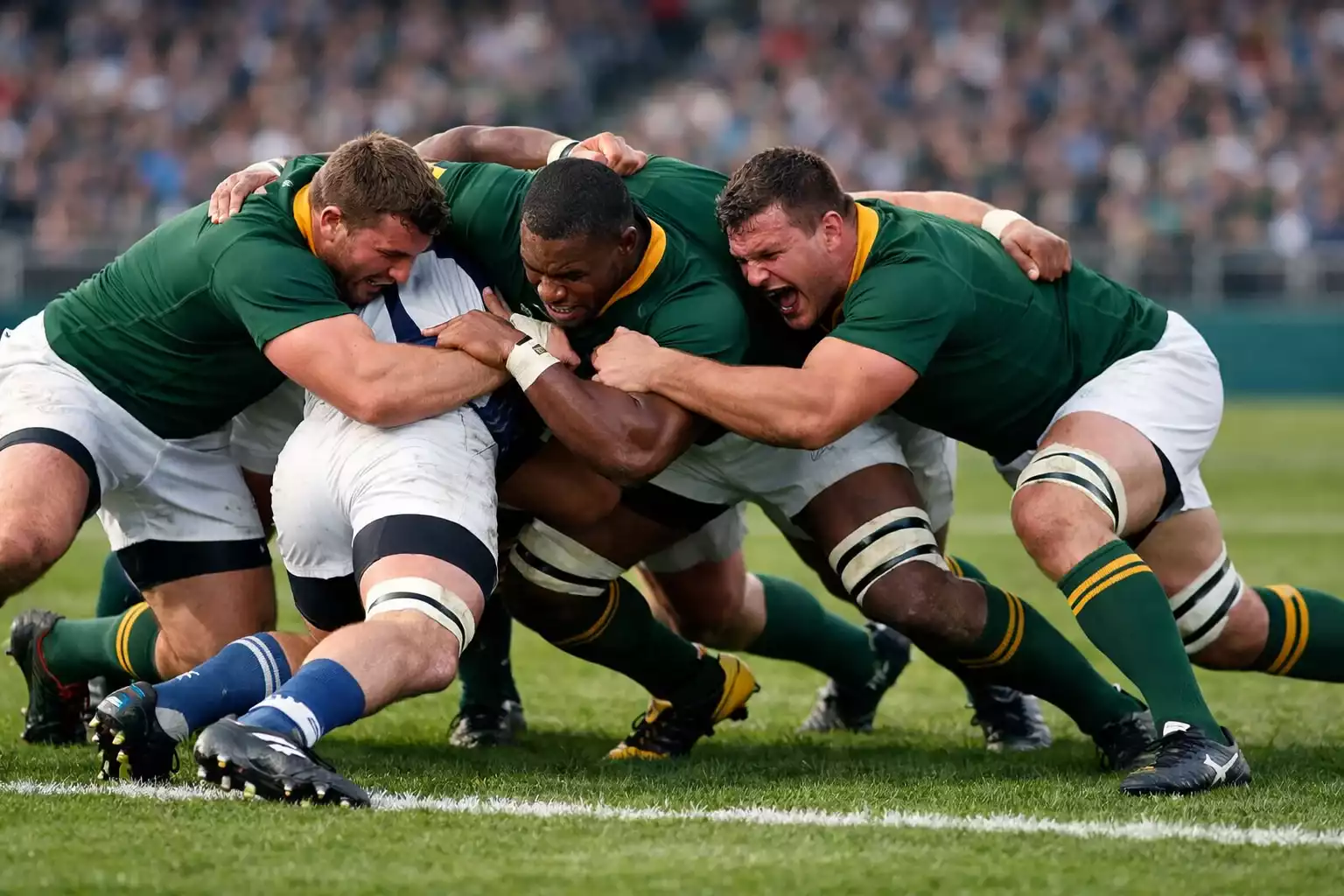
The outright winner market captures more attention and betting volume than any other Rugby World Cup proposition. Bookmaker odds in late 2026 establish the market’s current view, but value lies in identifying where those odds misprice actual winning probability. Examining the top contenders and their respective paths to the Webb Ellis Cup reveals both the favorites and the potential value plays.
South Africa enters as defending champion with a case for favoritism that extends beyond merely holding the trophy. The Springboks have won four World Cups, demonstrating institutional knowledge of what tournament success requires. Their style of rugby, built on forward dominance, defensive pressure, and tactical kicking, travels well to knockout competition where errors get punished and conservative play often prevails. The core of their 2023 winning squad remains available for 2027, providing continuity that other contenders cannot match. The challenge involves maintaining motivation after achieving the ultimate goal and managing the transition as veteran players age out. History shows that back-to-back World Cup victories are exceptionally rare, achieved only twice: by New Zealand in 2011 and 2015, and by South Africa themselves in 2019 and 2023, suggesting that defending a title presents unique difficulties despite South Africa’s recent success.
New Zealand carries the weight of All Blacks legacy and the bitter memory of their 2023 final loss to South Africa. Three World Cup titles and a historical winning record that dwarfs all competitors make New Zealand perpetually dangerous regardless of current form. Their attacking rugby creates highlights and excitement while also producing the volatility that has cost them in recent tournaments. The All Blacks have a documented tendency to peak for World Cups, with form heading into tournaments often proving irrelevant to their actual performance once matches matter. Their odds typically shorten as tournaments approach, driven by public respect for the jersey and the All Blacks’ big-game reputation.
Ireland presents the most interesting analytical puzzle among the top contenders. World number one ranking, dominance in the Six Nations, and a playing squad stacked with talent suggest they should be favorites. Yet four straight quarterfinal exits at World Cups create a narrative of tournament failure that cannot be entirely dismissed. The question for 2027 is whether Ireland’s sustained excellence finally translates to World Cup knockout success or whether something about their preparation or mentality continues to produce disappointing exits. Betting on Ireland offers value if you believe the quarterfinal curse is merely small sample variance now due to regress.
France invested heavily following their 2023 home tournament, with domestic rugby restructured to support the national team. The talent pool runs deep, with physical forwards and creative backs producing entertaining, effective rugby. French rugby has historically suffered from inconsistency, capable of world-beating performances followed by inexplicable losses. Whether the current generation has solved this puzzle remains uncertain, but the ceiling is as high as any team in the tournament.
Australia benefits from host nation status, including home crowds, familiar conditions, and eliminated travel burden. Historical data shows hosting nations typically outperform their rankings at Rugby World Cups, with New Zealand and South Africa being the only nations to host and win. The Wallabies’ form heading into 2027 will determine whether they enter as genuine contenders or optimistic outsiders. Australia won the World Cup in 1991 and 1999 as visitors, demonstrating their ability to perform in major tournaments.
Our tournament winner pick: South Africa. The Springboks’ combination of proven tournament pedigree, stylistic suitability for knockout rugby, and squad continuity makes them the most reliable bet in the outright market. While their odds as defending champion do not offer the value of longer shots, the probability of them lifting the Webb Ellis Cup justifies their market position.
Pool Stage Predictions

The 2027 Rugby World Cup features six pools of four teams each, with the top two from each pool advancing to the Round of 16. Pool stage betting offers numerous opportunities, from pool winners to qualification markets to individual match outcomes. While the official draw had not been finalized at the time of this analysis, we can project likely pool compositions based on the seeding system and examine strategic approaches.
Tier 1 nations will be distributed across pools to avoid early clashes between top sides, with World Rugby rankings determining seeding positions. Expect each pool to contain one clear favorite, one competitive challenger, and two teams facing significant quality gaps. This structure produces predictable pool winner markets alongside more interesting qualification battles for second position.
Pool winner predictions for top-seeded teams represent high probability but low value propositions. When South Africa or New Zealand heads a pool, their winning odds might sit around 1.10 to 1.20, offering minimal return for substantial risk. The value in pool winner markets lies in identifying pools where the favorite faces a genuine challenger, creating competitive odds on both contenders. A pool containing Ireland and Scotland, for example, would produce more interesting pool winner odds than one where the gap between first and second seed is substantial.
Qualification markets provide better value for backing competitive second-tier teams. If Scotland draws into a pool with New Zealand, backing Scotland to qualify at odds around 1.40 might represent better value than their longer pool winner odds. These markets also identify potential value on teams that might qualify despite not topping their group. Emerging rugby nations like Fiji or Japan could offer attractive qualification odds in pools where they face manageable Tier 2 opposition for the second qualifying spot.
Pool stage upsets are rare but not unprecedented. Japan’s 2015 victory over South Africa remains the most famous example, but smaller upsets occur more frequently. A Tier 2 nation knocking off a depleted or complacent Tier 1 side happens at least once most tournaments. Identifying which pools present upset potential requires examining motivation differentials, scheduling advantages, and squad depth rather than simply comparing rankings.
Our pool stage approach: Focus on qualification markets for value rather than pool winner bets on heavy favorites. Identify pools where the second qualifying spot involves genuine competition and back the team with better matchup profiles against the other pool contenders. Avoid laying heavy odds on pool winners when a single upset result would sink the bet.
Knockout Stage Preview
The 2027 tournament introduces a Round of 16 following pool play, expanding the knockout bracket before quarterfinals. This additional round creates more knockout matches while slightly reducing the stakes of pool seeding since more teams advance. Predicting knockout stage outcomes involves projecting likely matchups based on expected pool results and analyzing how different styles match up in elimination contexts.
Round of 16 matchups will pit pool winners against third-place qualifiers from other pools and second-place teams against other pool winners. The seeding system rewards pool stage performance with theoretically easier early knockout draws. However, the nature of rugby knockout matches means that even favorable matchups carry risk. A top seed facing an unseeded opponent might be strong favorites, but the unseeded team needs only one exceptional performance to advance.
Quarterfinal projections assuming chalk pool results would feature the traditional powerhouses: South Africa, New Zealand, Ireland, France, England, and Australia likely occupy six of eight spots, with the remaining positions filled by emerging contenders or upset winners. The quarterfinal round has historically produced the tournament’s most dramatic results, with favorites regularly falling. Ireland’s repeated quarterfinal exits exemplify how anything can happen when elimination stakes raise pressure levels.
Semifinal expectations based on projected brackets suggest potential matchups like South Africa versus Ireland and New Zealand versus France or Australia. These hypothetical matchups illustrate how the bracket could produce either classic rivalries or intriguing stylistic contrasts. Home advantage for Australia could prove decisive if the Wallabies reach the semifinals, with Sydney crowds providing the kind of support that elevates performance in tight knockout matches.
Final prediction requires navigating an uncertain bracket while accounting for the physical and mental demands of reaching the championship match. Teams that grind through difficult semifinal victories sometimes arrive at finals depleted, while teams with easier paths may lack the battle-hardening that tournament progression provides. Our projected final features South Africa against New Zealand, a rematch of the 2023 championship match and a fitting culmination of the tournament’s two most successful rugby nations.
Our knockout stage narrative: South Africa’s tournament rugby expertise carries them through a bracket that tests their mettle without derailing their campaign. New Zealand finds the form that has historically materialized when the All Blacks need it most, setting up a final where the Springboks’ experience edges the outcome. Alternative scenarios where Ireland finally breaks through or France peaks at the right moment both carry reasonable probability, making the knockout stage genuinely unpredictable beyond the semifinal round.
Top Try Scorer Prediction
The tournament’s top try scorer market combines skill assessment with opportunity analysis. The leading scorers are not always the most talented finishers but rather players whose positions, team styles, and fixture schedules create the most scoring chances. Understanding these factors helps identify value beyond simply backing the most famous wingers.
Positional advantage heavily influences try scoring totals. Wingers and outside centers see the ball in space more frequently than inside backs, while fullbacks joining the line provide additional try-scoring opportunities. The pool stage structure also matters, as teams facing multiple weaker opponents create more scoring situations than those in competitive pools. A winger on a dominant team playing in an unbalanced pool might score four or five tries in the group stage alone, building a lead that proves insurmountable.
Team playing style affects individual scoring opportunities significantly. Teams that play expansive rugby and commit to finishing chances in wide channels produce more wing tries than conservative teams that prioritize forward play and territorial control. South Africa’s style, for instance, might win World Cups but rarely produces leading try scorers. New Zealand and France’s more attacking approaches create more individual finishing opportunities.
Historical patterns show that top try scorers often come from teams that reach at least the semifinals, maximizing the number of matches available for scoring. A prolific scorer eliminated in the quarterfinals cannot keep pace with a steady scorer whose team plays seven matches to the final. This dynamic favors backing players from likely deep-run teams rather than flashy finishers on uncertain squads.
Dark horse candidates include players from emerging nations whose playing time and fixture difficulty might produce unexpected totals. A Fijian winger facing favorable pool matchups could accumulate tries against weaker defenses, building a total that more famous players struggle to match despite superior overall ability.
Our top try scorer pick: Rather than naming a specific player whose circumstances may change before the tournament, we recommend targeting wingers from New Zealand, France, or Australia whose attacking team styles and likely deep tournament runs create maximum scoring opportunity. Avoid South African players despite their team’s projected success, as the Springboks’ style historically produces distributed rather than concentrated try scoring.
Player of the Tournament Prediction
The player of the tournament award typically goes to a standout performer from the winning or finalist team, though exceptional individual contributions from other sides occasionally earn recognition. Predicting this award requires projecting both team success and individual brilliance within that context.
Position patterns in past winners show a mix of backs and forwards, with playmakers and dominant ball carriers featuring prominently. Fly-halves who orchestrate winning campaigns often receive recognition, as do dynamic loose forwards who influence both attack and defense. Pure finishers like wingers win less frequently despite accumulating tries, suggesting voters value overall game influence over scoring statistics.
Past winners include players whose performances transcended their team results and others whose excellence coincided with championship runs. The award has gone to players from the winning team more often than not, but finalists and even semifinalists have earned recognition when individual performance clearly exceeded peers. This pattern suggests backing players from the projected finalists provides the best probability baseline.
Key candidates for 2027 include playmakers from South Africa, New Zealand, and Ireland whose decision-making and execution could define their team’s tournament. Loose forwards from physically dominant teams who control breakdowns and carry effectively present another candidate category. The specific players earning consideration will depend on form and fitness heading into the tournament, making early predictions less valuable than assessing categories of likely winners.
Our approach: Focus on fly-halves and number eights from projected finalists, as these positions historically produce winners while offering reasonable odds compared to backing specific players on long-shot teams. The playmaker who guides the winning team through knockout matches almost always receives serious consideration regardless of statistical output.
Upset Predictions

Every Rugby World Cup produces results that defy expectations and reward bettors brave or foolish enough to back massive underdogs. Identifying where upsets might occur requires examining factors beyond simple ranking comparisons, including motivation, scheduling, and stylistic matchups.
Historical upset context helps calibrate expectations. Japan’s 34-32 victory over South Africa in 2015 remains the benchmark, a result so unexpected that initial reports assumed score transmission errors. Fiji has produced multiple upset victories, including wins over Wales. Argentina’s emergence as a major rugby nation began with upset results at World Cups before their quality became widely recognized. These precedents suggest that one or two significant upsets per tournament represents the baseline expectation.
Upset conditions typically involve some combination of the following: an underdog with nothing to lose playing a favorite managing multiple pressures; scheduling advantages where the underdog has more rest or preparation time; stylistic matchups that neutralize the favorite’s strengths; and environmental factors like weather that compress scoring and increase randomness. When multiple conditions align, upset probability increases meaningfully beyond what odds typically reflect.
Tier 2 nations to watch include Fiji, whose physical style and sevens-honed skills can overwhelm structured opponents having off days. Japan’s home World Cup experience in 2019 produced a new generation of players comfortable on the big stage. Samoa and Tonga carry power and motivation that creates danger against complacent opponents. Georgia’s scrum dominance can frustrate teams unprepared for their forward approach.
Specific upset scenarios for 2027 might include a Pacific Island nation catching a depleted Tier 1 side in their final pool match when qualification is already secured. Another possibility involves weather-affected knockout matches where reduced scoring increases randomness, allowing tactically disciplined underdogs to stay competitive through territory and pressure.
Our upset pick: Watch for Fiji to produce at least one result that exceeds their ranking, likely against a European Tier 1 side in pool play. The Fijians’ unique combination of physical intensity and creative attacking play creates problems that structured Northern Hemisphere teams sometimes cannot solve. Back Fiji on handicap lines throughout the pool stage and consider small stakes on outright match victories when conditions favor their style.
Best Value Bets for RWC 2027

Value in betting exists where available odds exceed true probability. The following picks represent positions where our analysis suggests bookmaker odds underestimate actual likelihood, creating opportunities for positive expected value.
Outright value pick: Ireland at enhanced odds. Despite their quarterfinal history, Ireland’s sustained excellence at the top of world rankings indicates genuine quality that eventually translates to tournament success. If available at odds significantly longer than New Zealand despite comparable or superior current form, Ireland represents value. The market discounts them for historical reasons that may not predict future performance, creating opportunity for bettors willing to back quality over narrative.
Pool stage value: Back qualification rather than pool winners. The expected value of backing clear favorites to win pools rarely justifies the risk of a single upset result. Shifting to qualification markets, where even second-place finish pays out, dramatically improves probability while maintaining reasonable returns. A team at 1.35 to qualify offers better value than 1.12 to win the pool if your primary interest is backing their advancement.
Knockout stage value: Underdog handicaps in quarterfinals. History shows quarterfinal margins run tighter than earlier rounds as teams play conservatively in elimination matches. Favorites often win but rarely cover large spreads, making underdog handicap positions systematically valuable. When a 10-point favorite wins by 7, the underdog handicap bet cashes despite the expected team winning. This pattern has produced value in past tournaments and likely continues in 2027.
Prop bet value: Player markets on semi-finalists. Top try scorer and player of the tournament markets favor players whose teams advance deeply into the bracket. Rather than backing the best player on a team expected to exit early, identify quality players on projected semifinalists or finalists. Their additional matches create opportunities to accumulate statistics or performances that justify pre-tournament bets.
Accumulator value: Pool stage favorites covering handicaps. When Tier 1 nations face Tier 3 opponents with massive handicap spreads, the favorite covering represents high probability in each individual match. Combining four or five such selections into an accumulator produces reasonable odds while maintaining strong expected probability. This approach extracts value from mismatches that offer nothing in match winner markets while managing risk through selection of only the most lopsided fixtures.
Hedging value: Back multiple contenders. With four or five teams at relatively similar odds in the 4.00 to 6.00 range, backing multiple contenders with appropriately sized stakes can create positions where any of several outcomes produces profit. This approach trades maximum upside for increased probability of positive returns, suiting bettors who prefer consistent smaller wins over boom-or-bust tournament bets.
Rugby World Cup 2027 Predictions Summary and Best Value Bets to Consider

The 2027 Rugby World Cup promises compelling rugby across 52 matches featuring 24 teams, with Australia’s hosting creating both home advantage drama and logistical considerations that affect all participants. Our analysis points toward South Africa as the most likely champion, with New Zealand and Ireland representing the primary challengers and France and Australia capable of breakthrough performances.
Pool stage betting should focus on qualification markets rather than heavily favored pool winners, extracting value from positions where single upsets do not destroy bets. Knockout stage underdogs on handicap lines offer systematic value based on historical patterns of tight elimination margins. Individual award markets favor players from projected finalists whose extended tournament runs create statistical opportunity.
See also the pool winner predictions.
The predictions in this guide represent informed analysis rather than certainty. Rugby has humbled confident forecasters too often for anyone to claim reliable foresight about tournament outcomes. Use these picks as starting points for your own analysis, testing our reasoning against your assessment of team quality, form, and tournament dynamics. The bettors who profit from the 2027 Rugby World Cup will combine preparation with adaptability, adjusting positions as new information emerges while maintaining disciplined approaches to bankroll and value assessment.
