

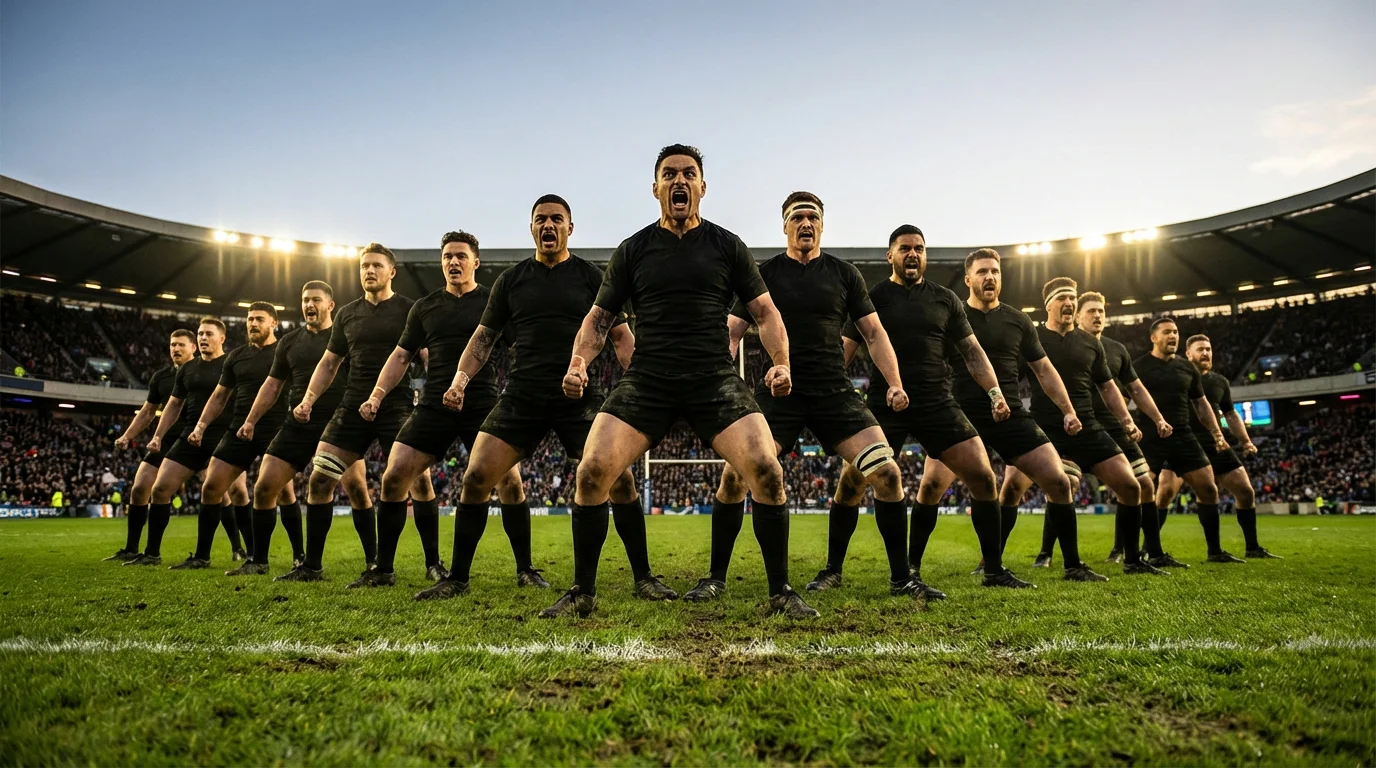
Three World Cup titles. A win rate that hovers above 75% across the tournament’s entire history. A brand of rugby so deeply embedded in national identity that losing a pool match qualifies as a crisis. The All Blacks arrive at every World Cup as either favourites or near the top of the market, and 2027 in Australia will be no exception. But the question for bettors isn’t whether New Zealand are good. It’s whether they’re good enough at the price the bookmakers set. Backing the All Blacks to win the Webb Ellis Cup is never a bad emotional choice, but emotion and value are different currencies entirely.
New Zealand RWC 2027 on rugby world cup betting.
Historical Dominance and Its Limits
New Zealand’s World Cup record is the benchmark against which every other nation is measured. Winners in 1987, 2011, and 2015, they’ve reached the final or semi-final in nearly every edition. That sustained excellence across four decades of professional rugby is unmatched. Yet the record also tells a more nuanced story. The 24-year gap between 1987 and 2011, during which the All Blacks were eliminated in semi-finals, quarter-finals, and even the group stage through apparent invincibility being punctured at precisely the wrong moment, is a reminder that World Cups compress the margin for error.
The 2023 tournament in France ended in a final loss to South Africa, a narrow defeat that could have gone either way. Before that, the 2019 semi-final loss to England in Japan demonstrated that even peak All Blacks teams can be tactically unpicked on the day. These recent results matter because they shape the 2027 narrative. New Zealand will carry the hunger of two consecutive tournaments without lifting the trophy, but they’ll also carry the knowledge that the modern World Cup is harder to win than the historical record suggests.
For bettors, the historical dominance creates a pricing problem. Bookmakers know that casual punters back the All Blacks out of respect and habit, which compresses the odds and often pushes them below fair value. The sharp money doesn’t bet on reputation. It bets on the current squad, the coaching setup, and the draw. And those factors paint a more complex picture than the famous silver fern might suggest.
Squad Assessment: The 2027 Window
The All Blacks squad heading into the 2027 cycle sits in an interesting transition. The generation that powered the 2023 final run, players like Ardie Savea, Aaron Smith, and Sam Whitelock, has largely moved on. The rebuild that began after the 2023 campaign, initially under Scott Robertson before his departure in January 2026, has focused on blooding a younger group while maintaining competitiveness in the Rugby Championship and Bledisloe Cup.
The forward pack is where New Zealand’s 2027 hopes will be built or broken. The All Blacks have historically won World Cups with dominant set pieces and relentless breakdown work, and the current crop of loose forwards is as talented as any in world rugby. The question is whether the tight five, particularly the front row and locking stocks, can match the physical power of South Africa and the emerging scrummaging of France. World Cups are won up front, and the All Blacks know it.
Behind the scrum, the depth of talent is almost embarrassing. New Zealand continues to produce electric outside backs at a rate that defies their small population, and the halfback and fly-half positions feature genuine competition for starting jerseys. The challenge is integration. A squad packed with individual brilliance needs time to gel into a cohesive unit, and the compressed international calendar means that combinations are often tested under fire rather than in training. By October 2027, the question will be whether the new coaching team has had enough runway to turn raw talent into a functioning machine.
Coaching and Tactical Evolution
Scott Robertson’s appointment as All Blacks head coach after the 2023 World Cup marked a new era, but his tenure ended abruptly in January 2026 when he was sacked following an end-of-season review. His record with the Crusaders in Super Rugby was extraordinary, winning seven consecutive titles with a brand of rugby that combined structure with creative flair. However, translating that success to the international stage proved a different challenge, and Robertson’s two years in charge were marked by inconsistent results, including the heaviest defeat in All Blacks history — a 43-10 loss to South Africa in Wellington.
The All Blacks’ new coaching setup will need to bring energy and tactical flexibility to the 2027 campaign. The coaching philosophy going forward will need to balance pace and ball movement with the pragmatic game plan required for the tight, forward-dominated matches that the knockout stages often produce.
The coaching team’s ability to prepare for specific opponents will be critical. Modern World Cups are won through detailed analysis and tactical specificity, not just superior talent. South Africa’s victory in 2023 was built on a suffocating defensive system and a kicking game that strangled opposition attacks. If the All Blacks meet the Springboks in the knockout stages again, their coach will need a plan that goes beyond playing attractive rugby. The bookmakers don’t factor coaching nuance into their odds, which is exactly where informed bettors can find their edge.
The Australia Factor
Playing a World Cup in Australia carries specific implications for New Zealand. The trans-Tasman rivalry is one of sport’s most intense, and the proximity means that thousands of New Zealand fans will make the short trip across the ditch, creating a quasi-home atmosphere at many venues. This supporter presence shouldn’t be underestimated. The All Blacks have historically performed well in Australia, with the Bledisloe Cup record heavily in their favour, and the familiarity with Australian conditions, pitches, and time zones removes the adjustment period that Northern Hemisphere teams will face.
The climate suits New Zealand’s preferred style of play. Fast, dry pitches in cities like Sydney and Perth encourage ball movement and reward the kind of pace and skill that the All Blacks produce naturally. Conversely, if matches are played in wet conditions in Melbourne or Brisbane, the All Blacks have the forward grunt to adapt, even if it’s not their first choice. The versatility to play in multiple conditions is a genuine advantage that the market may not fully price.
However, the Australia factor cuts both ways. The Wallabies, buoyed by home support and improved form through the 2025-2026 cycle, could present a serious obstacle if the draw places them on a collision course in the knockout stages. An All Blacks versus Australia quarter-final or semi-final in Sydney would be an emotionally charged contest where form goes out the window and occasion takes over. New Zealand have won these battles more often than not, but betting on them at short odds in a cauldron atmosphere carries more risk than the historical record implies.
Evaluating the Odds: Is There Value?
The All Blacks will almost certainly be priced as either outright favourites or joint-favourites for the 2027 World Cup. Current futures markets have them trading in the range of +250 to +350 depending on the bookmaker, reflecting both their pedigree and the expectation of improvement under new coaching. The question is whether those odds represent genuine value or merely reflect the All Blacks tax, the premium that attaches to New Zealand’s name regardless of current form.
To assess value, compare the implied probability of the odds against a realistic assessment of their chances. At +300, the implied probability is 25%. Is there a one-in-four chance that New Zealand win the 2027 World Cup? Given that there are realistically five or six teams capable of winning, with South Africa, France, Ireland, England, and the host nation Australia all legitimate contenders, a 25% probability feels about right, maybe slightly generous. That makes the All Blacks at +300 a fair bet rather than a value bet.
The value, if it exists, will come from timing and market movement. If New Zealand have a poor Rugby Championship in 2026 or suffer an early loss in 2027, the odds will drift, and that could present a buying opportunity. Conversely, if they arrive in Australia on a winning streak, the odds will compress further, making them a poor value proposition for outright betting. The smart approach is to set a target price, say +400 or longer, and back them only if the market reaches that level.
Where the Smart Money Looks
Rather than betting on New Zealand to win the whole tournament at compressed odds, consider the derivative markets where their strengths create better opportunities. Pool winner markets, assuming the draw is favourable, will likely offer short prices but near-certain returns. The All Blacks have lost only a handful of pool matches in World Cup history, and if they’re drawn in a pool without another top-four nation, the pool winner bet becomes close to a certainty.
Top tryscorer markets also favour All Blacks outside backs. New Zealand’s wingers and fullbacks consistently feature among the leading try-scorers at World Cups, thanks to the team’s attacking philosophy and the mismatch games in the pool stages. If one of their speedsters is priced outside the top five for the tryscorer market, that may represent the best New Zealand-related value at the entire tournament.
See also South Africa Springboks preview.
The match-by-match approach is ultimately the sharpest way to profit from New Zealand at the 2027 World Cup. Back them on the handicap in mismatch pool games, look for value in the first-half markets when they face teams that will tire, and consider opposing them in tight knockout matches against Southern Hemisphere rivals who won’t be intimidated by the haka. The All Blacks are a magnificent rugby team. But magnificent and value are not the same thing, and the best bettors know the difference.
