

Most rugby bettors stick to the moneyline or the handicap and never venture into the stranger corners of the market. Correct score and winning margin betting live in those corners, offering higher odds, steeper challenges, and the kind of returns that make the standard markets look pedestrian. Predicting the exact final score of a rugby match is, to put it mildly, difficult. But predicting the winning margin within a bracket, say 1-10 points or 11-20 points, is considerably more achievable and rewards the same analytical approach that works elsewhere. These niche markets are where bookmakers’ models are least refined and where the prepared bettor can find edges that simply don’t exist in the headline markets.
How Correct Score Markets Work in Rugby
Correct score betting in rugby asks you to predict the exact final scoreline of a match. Unlike football, where the range of plausible scorelines is narrow (most matches end somewhere between 0-0 and 4-3), rugby produces a vast array of possible scores. A match could finish 27-18, 35-14, or 12-9, and even a small change in a single conversion or penalty attempt shuffles the final numbers. This breadth of outcomes is what makes the market both challenging and potentially lucrative. Individual correct score options typically carry odds of +2000 or higher, reflecting the low probability of hitting any specific scoreline.
The structure of rugby scoring creates distinctive patterns that narrow the field. Points come in clusters of three (penalty or drop goal), five (unconverted try), and seven (converted try or penalty try). This means that certain scorelines are structurally more likely than others. A score of 21-14 (three converted tries to two) is inherently more probable than 22-13, because 22 requires an unusual combination of scoring events while 21 can be reached through clean sets of conversions. Understanding this scoring grammar gives you a framework for eliminating implausible scorelines and focusing your bets on the outcomes that the maths favours.
The practical approach to correct score betting at a World Cup involves focusing on matches with predictable patterns. Pool-stage mismatches between Tier 1 and Tier 2 nations often follow a script: the favourite builds a lead through the first half, extends it after the break, and the underdog may score a consolation in the final quarter. If you can estimate the favourite’s likely scoring range (say, 40-55 points) and the underdog’s (say, 7-17 points), you can identify a cluster of three to five plausible scorelines and spread your stake across them. No individual selection is likely to hit, but the collective probability of one from your cluster landing is significantly higher than any single bet suggests.
Winning Margin Brackets: The Smarter Play
Winning margin betting asks you to predict the gap between the winning and losing scores, typically in defined brackets. Common brackets include 1-10 points, 11-20 points, 21-30 points, and 31+ points. This market is considerably more forgiving than correct score betting because it requires directional accuracy and approximate margin estimation rather than exact numbers. It’s the niche market that most closely resembles handicap betting but with better odds and more flexibility.
The beauty of margin brackets is that they align with how rugby matches actually play out. Tight matches between evenly rated teams tend to cluster in the 1-12 point range, reflecting the typical swing of one or two scoring events. Comfortable victories by clear favourites fall into the 13-24 point range, corresponding to a two-to-three-try advantage. Blowouts against significantly weaker opponents push past 25 points and into the ranges where most casual bettors don’t even look. Each bracket has a distinct probability profile that changes based on the teams involved and the match context.
For World Cup betting, winning margin brackets become most valuable during the pool stages. When a top-ranked nation faces a Tier 2 opponent, the question isn’t whether the favourite will win but by how much. The moneyline is useless at odds of -2000 or shorter. The handicap offers a binary outcome. But the winning margin bracket allows you to express a more nuanced view. If you think South Africa will beat a pool opponent by somewhere between 30 and 45 points, you can target the 31-40 bracket at significantly better odds than the equivalent handicap line would offer.
Historical Patterns and What They Tell Us
World Cup scoring data across ten tournaments reveals consistent patterns that inform both correct score and margin betting. Pool-stage matches between ranked and unranked teams produce average winning margins in the 25-35 point range, with significant variation based on the specific matchup. Matches between Tier 1 nations average winning margins of 8-12 points, and the knockout stages compress this further, with semi-finals and finals averaging margins of less than 7 points.
These averages mask useful distributional information. In pool-stage mismatches, the winning margin is highly variable, ranging from 15 points in a surprisingly competitive match to 80 or more in a historic blowout. This wide distribution means that any single margin bracket carries meaningful probability, and the bookmakers’ odds for each bracket often don’t reflect the historical frequency accurately. If the 41-50 point bracket for a particular mismatch is priced at +600 but historical data suggests it hits 12% of the time (implying fair odds of +733), the value is marginal. But if that same bracket is priced at +800 while hitting at a 15% rate, you have a genuine edge.
Knockout matches, by contrast, produce much tighter distributions. Semi-finals and finals at World Cups are disproportionately decided by margins of 1-7 points, reflecting the conservative, risk-averse nature of elimination rugby. The 1-5 point bracket in a World Cup semi-final is historically the most likely outcome, yet bookmakers often price it similarly to wider brackets because the market assumes that strong teams will assert dominance. This is where the correct score and margin bettor gains an edge: knowing that knockout rugby is tighter than the market prices.
Factors That Shape Scorelines at the 2027 World Cup
The expanded 24-team format introduces new dynamics that will influence scoring patterns. The Round of 16, appearing for the first time, adds an extra knockout match that will likely produce tight, cagey results as teams adjust to the sudden-death format. First-time knockouts between a pool winner and a third-placed qualifier could produce more open matches if the underdog decides to take risks, knowing they have nothing to lose. These structural changes create opportunities for bettors who understand that a new format changes the scoring distribution even if the teams themselves haven’t changed.
Australian conditions will tilt scorelines in specific directions. Fast, dry surfaces in Perth and Sydney favour high-scoring rugby, pushing the expected total upward and widening the plausible winning margin range. Humid conditions in Brisbane produce more errors and fatigue-related scoring, often resulting in lopsided second halves that inflate the final margin beyond what the first-half score suggested. Melbourne’s variable weather creates the widest range of plausible outcomes, making it the hardest venue for correct score betting and the best for margin bracket bets where the wider range of possibilities works in your favour.
Time of day matters more than most bettors realise. Afternoon kickoffs in October produce different scoring patterns than evening matches. The heat of a 3pm start in Brisbane creates conditions where Northern Hemisphere packs wilt in the second half, producing margins that blow out late. Evening matches, with cooler temperatures and firmer surfaces, tend to be tighter and more controlled, favouring narrow margin brackets. If you’re betting on winning margins, always check the kickoff time and cross-reference it with the venue’s expected conditions. A five-point swing in the expected margin, caused purely by the time of day, can shift your optimal bracket by a full tier.
Practical Betting Strategies for These Markets
The most disciplined approach to correct score betting is to treat it as a portfolio investment rather than a series of individual bets. For each match you analyse, identify three to five plausible scorelines based on team strength, venue conditions, and tournament stage. Divide your stake equally across these selections, accepting that you’ll lose most of them but that the occasional hit at long odds will compensate. The mathematics require discipline. If your average correct score odds are +2500 and you hit one in every twenty-five attempts, you’re breaking even before margin. You need to hit at a rate better than the odds imply, which means your selection process must be sharper than the bookmaker’s pricing model.
Winning margin brackets allow a more aggressive staking approach because the probabilities are higher and the odds are lower. A sensible strategy is to identify the most probable bracket for each match and bet it as a single, then use a smaller stake on the adjacent bracket as insurance. For example, if you believe a match will be decided by 7-15 points, your primary bet goes on the 11-20 bracket and a smaller stake goes on the 1-10 bracket. If the margin lands at 12, your primary bet wins. If a late try reduces it to 8, your insurance bet saves the position. This bracketing approach reduces variance while maintaining exposure to the most likely outcomes.
Combining margin bets with other selections in multiples can amplify returns, but this should be done sparingly and only with high-confidence selections. A double consisting of Team A to win plus the 1-10 point margin bracket is essentially a bet that Team A wins a tight game. If your analysis supports a close result, this double offers a much better return than either individual component. The risk is that combining bets multiplies the probability of loss, so reserve this approach for matches where your conviction is highest and the individual components are independently justified.
The Scoreline as a Story
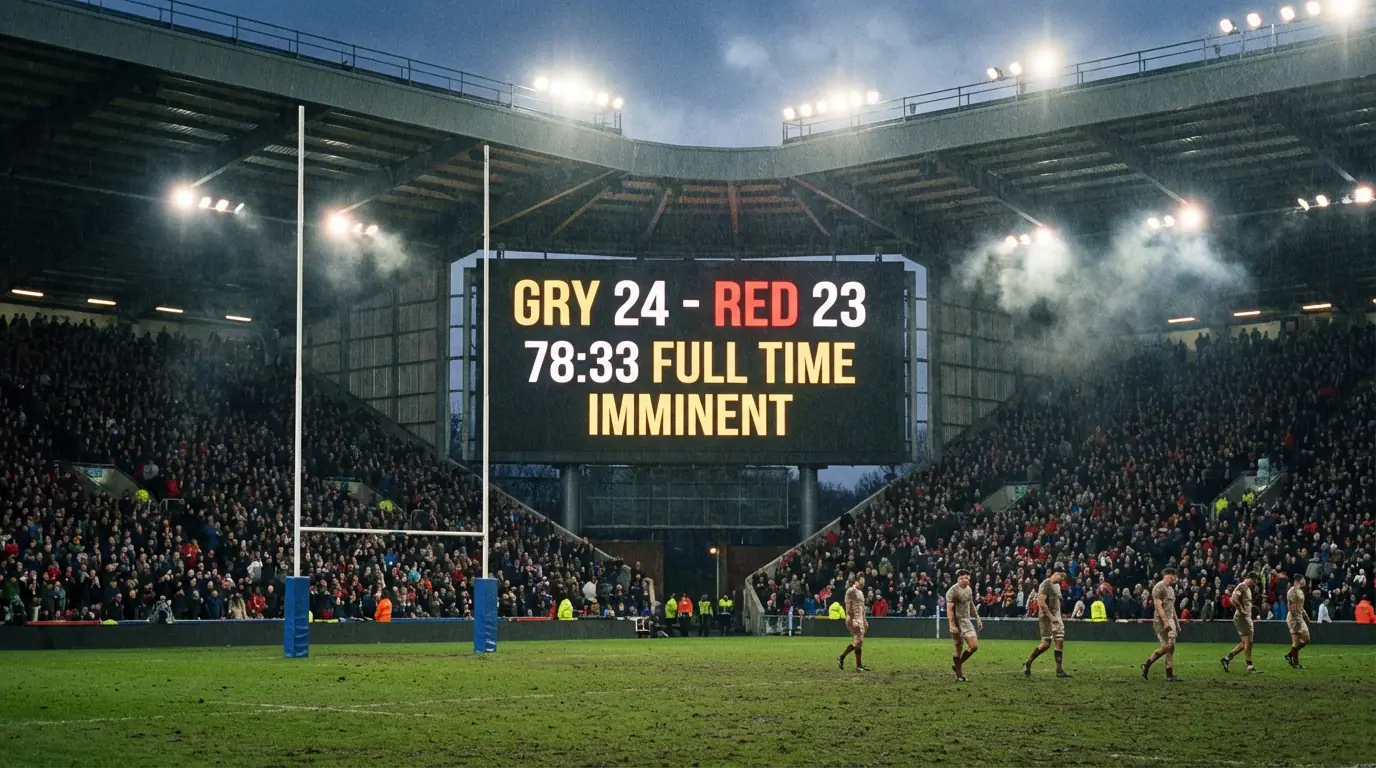
Every final scoreline tells a story. A 24-21 result speaks of momentum swings, lead changes, and a match decided in the final minutes. A 45-10 result describes early dominance, a demoralised opponent, and a match effectively over by half-time. A 9-6 result screams wet weather, forward attrition, and goal-kickers earning their paycheques. The correct score and winning margin bettor learns to read these stories in advance, mapping the likely narrative of each match onto the numerical outcomes it will produce.
At the 2027 World Cup, the stories will be shaped by the collision between the expanded format and the Australian landscape. Pool matches between established powers and newcomers will produce wide margins and high totals. Knockout matches between evenly matched Tier 1 nations will produce the tightest scorelines of the tournament. The Round of 16 will generate a mix of both, depending on the draw and the specific matchups. Each story has a scoreline, and each scoreline has a price.
The punters who profit from correct score and winning margin betting won’t be the ones who got lucky on a single match. They’ll be the ones who built a systematic approach across the entire tournament, treating each match as a data point in a broader strategy. They’ll have tracked the scoring patterns through the pool stages, adjusted their models for the knockout format, and refined their bracket probabilities based on actual results rather than pre-tournament assumptions. By the time the final rolls around, they’ll know exactly which margin bracket the data favours, and they’ll place their bet with the quiet confidence of someone who has done the work that the rest of the market skipped.
