

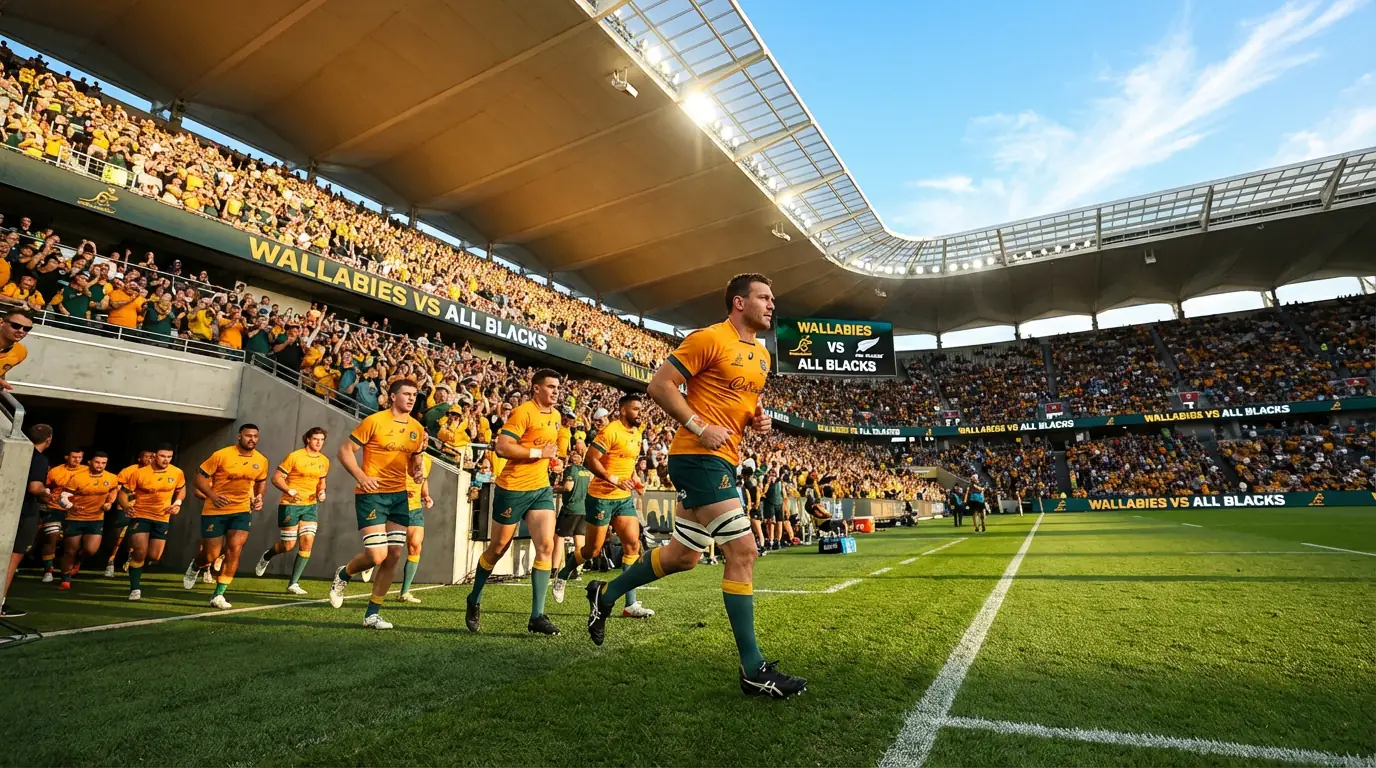
The last time Australia hosted a Rugby World Cup, in 2003, they reached the final and lost to England in extra time on a Jonny Wilkinson drop goal. That heartbreak in Sydney remains seared into Australian rugby’s collective memory, and 2027 offers a shot at redemption. Home advantage in rugby is real, measurable, and historically significant at World Cups. The Wallabies will play in front of packed stadiums, on pitches they know intimately, in a climate that favours their style. The betting question is whether a resurgent Australia can convert that advantage into a genuine title challenge, or whether the bookmakers have already priced the home factor into odds that don’t represent true value.
Quantifying Home Advantage at Rugby World Cups
Home advantage at Rugby World Cups is not just about crowd noise, though that matters. It encompasses familiarity with venues, elimination of travel fatigue, climate acclimatisation, and the psychological boost of playing in front of your own supporters. The data across World Cup history supports its significance. Host nations have reached the semi-finals in the majority of tournaments, and two of the ten World Cup winners, New Zealand in 2011 and South Africa in 1995, had home advantage.
The numbers tell a clear story when you examine pool-stage performance. Host nations win their pool matches at a rate significantly above their world ranking, partly because the draw is often structured to avoid the host facing the strongest teams in the pool phase, but also because the home crowd creates a pressure cooker that visiting teams struggle to handle. Penalty counts tend to favour the home side, marginal refereeing decisions go their way more often, and the energy from the stands can lift a team during the moments when a match hangs in the balance.
For Australia specifically, the home advantage is amplified by geography. European and South American teams will face long-haul travel, significant time zone adjustments, and a climate shift from Northern Hemisphere autumn to Australian spring. Pacific Island nations are closer geographically, but they lack the infrastructure and preparation time that Australia enjoys. South Africa and New Zealand are the only visiting teams likely to feel genuinely comfortable in Australian conditions, which narrows the Wallabies’ home advantage primarily against the Northern Hemisphere contenders they might face in the knockout stages.
The Wallabies’ Trajectory Under Joe Schmidt
Joe Schmidt’s appointment as Wallabies head coach marked a turning point for Australian rugby. The former Ireland head coach and New Zealand assistant brought a level of tactical precision and organisational discipline that Australian rugby had lacked for years. Under Schmidt, the Wallabies have moved from a team that was difficult to predict to one that executes structured game plans with increasing consistency.
Schmidt’s coaching record speaks for itself. He turned Ireland into a side capable of beating New Zealand regularly, and his influence on the All Blacks’ coaching setup added another layer of World Cup experience. His approach, built on meticulous preparation, set-piece excellence, and a structured attacking game that creates opportunities through phase play rather than individual brilliance, is precisely what Australia needed after years of underperformance at the highest level.
The results through the 2025-2026 cycle will be the clearest indicator of Australia’s 2027 prospects. If Schmidt can establish a settled starting fifteen, build genuine depth across all positions, and produce consistent results against Tier 1 opposition, the Wallabies’ odds will shorten considerably. The early signs suggest a team on an upward trajectory, but international rugby is unforgiving, and one poor tournament or a string of injuries to key players can derail even the best-laid plans. Bettors should monitor the Wallabies’ results closely, because the odds will move in real time with their form.
Squad Depth and Emerging Talent
Australia’s player pool has been a concern for years, with the lure of rugby league, AFL, and overseas contracts thinning the ranks of available talent. But there are signs of recovery. A renewed focus on domestic pathways, improved Super Rugby Pacific performances from Australian franchises, and a concerted effort to retain players in the country have started to bear fruit.
The backline is where Australia’s most exciting prospects are emerging. Young outside backs with genuine pace and finishing ability are coming through the Super Rugby system, and the halfback and fly-half positions are more competitive than they’ve been in a decade. If Schmidt can harness this backline talent within his structured system, the Wallabies could be devastating in home conditions on fast pitches that reward running rugby.
The forward pack remains the area where Australia needs the most improvement. The Wallabies’ scrum has been a liability at recent World Cups, and without a dominant set piece, the entire game plan is built on unstable foundations. Schmidt’s emphasis on scrum technique and lineout precision has shown improvement, but matching the power of South Africa, the athleticism of France, or the all-round excellence of New Zealand’s pack requires time, investment, and a generation of forwards who can compete physically at the highest level. Whether that generation is ready by October 2027 is the central uncertainty in Australia’s campaign.
Venue Advantage: Playing the Conditions
Australia’s 2027 World Cup will be spread across major cities including Sydney, Melbourne, Brisbane, and Perth, each with distinct conditions that favour different styles of play. The Wallabies know these grounds intimately. They’ve played test matches and domestic fixtures at every venue for decades, understanding the quirks of each surface, the wind patterns, the altitude effects, and the crowd dynamics that visiting teams will encounter for the first time.
Sydney’s Stadium Australia offers a firm, fast surface that rewards expansive rugby. If Australia draw a knockout match there against a Northern Hemisphere opponent more accustomed to wet, heavy pitches, the conditions alone could be worth a seven-point swing. Melbourne, with its more unpredictable weather, suits a team that can adapt quickly, and the Wallabies’ familiarity with Melbourne’s changeable conditions gives them an edge in tactical preparation that Schmidt will exploit.
Perth and Brisbane offer heat as an additional weapon. European teams arriving from autumn conditions will face temperatures that tax their endurance and affect decision-making in the final quarter. Schmidt’s squad will have prepared specifically for these conditions, managing hydration, rotation, and bench usage to maintain intensity when opponents fade. This isn’t a marginal advantage. In a tight knockout match, the team that manages the heat better wins, and the home team has an inherent edge in that equation.
Odds Assessment: Is Australia a Value Bet?
The Wallabies will likely be priced somewhere between +600 and +1000 for the outright market, depending on their form heading into the tournament. At those odds, Australia represent one of the more interesting value propositions in the 2027 World Cup betting market. The implied probability at +800 is roughly 11%, and for a host nation with improving form, an experienced coach, and conditions that suit their style, that may understate their genuine chances.
The historical precedent supports a closer look. Host nations in rugby consistently outperform their pre-tournament ranking at World Cups, and Australia’s rugby infrastructure, despite its challenges, is capable of producing a team that can compete with anyone on its day. The key variable is consistency. Australia have been a team of brilliant moments punctuated by baffling losses for much of the past decade. If Schmidt can iron out the inconsistency, the talent is there to beat any team in the draw.
The value calculus depends on timing. Backing Australia now, while the odds are long and the squad is still developing, locks in a price that may not be available by mid-2027. If the Wallabies win the 2026 Rugby Championship or string together impressive results against touring teams, the market will move sharply. The risk of an early bet is that Australia fail to improve and the money is wasted, but the potential reward, a host nation at +800 or longer winning the World Cup, makes it a proposition worth serious consideration for bettors comfortable with long-shot futures.
The Knockout Stage Riddle
Australia’s World Cup history is marked by a pattern: strong pool performances followed by knockout-stage heartbreak. The 2003 final loss, the 2015 final defeat to New Zealand, and various semi-final exits paint a picture of a team that consistently gets close but can’t quite close the deal. Breaking that pattern in front of home fans would require something that can’t be measured in statistics: composure under the most intense pressure imaginable.
Schmidt’s experience coaching Ireland, a team with its own history of World Cup underperformance, could prove invaluable. He understands the psychology of tournament rugby and the specific mental barriers that prevent talented teams from performing at their best when elimination is on the line. If he can apply the lessons from Ireland’s repeated failures to build a more resilient Australian mindset, the Wallabies could finally convert their talent into knockout-stage success.
The draw will play a significant role. If Australia avoid the heavyweights until the semi-finals, a home quarter-final against a lower-seeded opponent on a fast pitch in Sydney or Brisbane could build the kind of momentum and belief that carries a team to a title. But if the brackets put them on a collision course with South Africa or New Zealand in the quarters, the dream could end early. For bettors, the draw ceremony will be one of the most important moments in the pre-tournament calendar, potentially transforming Australia from a value pick to a legitimate title contender or exposing them to a brutal path that their odds don’t justify.
Beyond the Outright Market
If the outright bet feels too speculative, the match-level markets offer more controlled ways to capitalise on Australia’s home advantage. The Wallabies will be near-certain pool winners if the draw is kind, and pool winner bets at short odds could provide steady returns. Match handicaps in pool games against lower-ranked opponents, particularly at venues where the Wallabies are strongest, allow bettors to leverage the home advantage without the variance of an outright futures bet.
The most intriguing angle may be the Wallabies in specific knockout matches against European opposition. If Australia face England, Ireland, or Scotland in a quarter-final under lights in Sydney, the combination of home crowd, familiar conditions, and coaching preparation could produce an outcome that surprises the market. Sometimes the best World Cup bets aren’t about picking the winner. They’re about identifying individual matches where the conditions, the narrative, and the odds align in your favour. For Australia in 2027, those matches will come. The only question is whether the Wallabies have the squad to seize them.
