

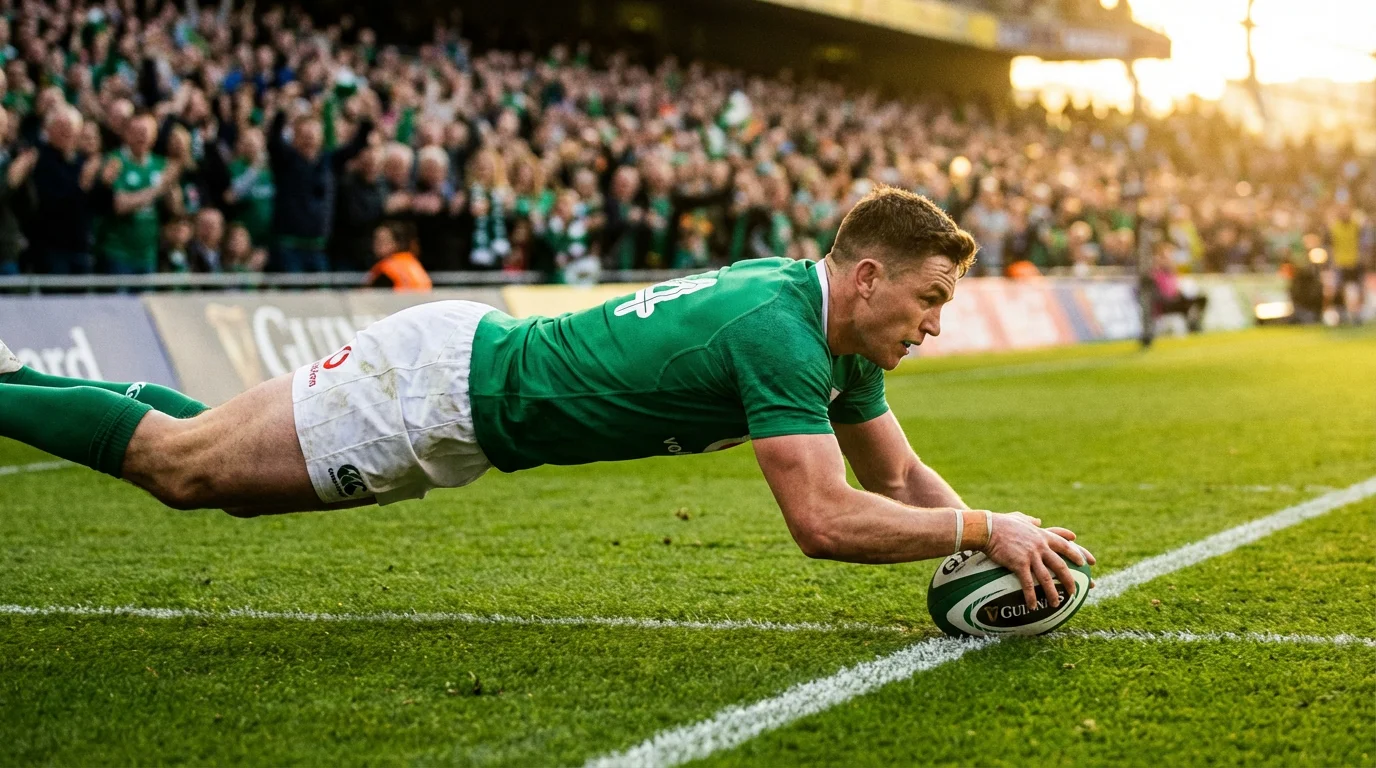
Player prop markets are where rugby betting gets personal. Instead of picking a team to win or a total to clear, you are picking a human being to do something specific on a rugby field — score the first try, cross the line at any point, earn the man of the match award, or accumulate a certain number of points. The stakes feel different because the bet is tied to an individual, and individual outcomes in a fifteen-player collision sport are wildly unpredictable.
That unpredictability is exactly why player props offer some of the best value in World Cup betting, and also why they are some of the most dangerous markets for undisciplined punters. Bookmakers price player props with wider margins than match-level markets because the variance is higher and the modelling is harder. But within those wider margins, there are pockets of genuine mispricing — spots where the market overvalues name recognition, underweights tactical tendencies, or ignores selection patterns that directly affect a player’s likelihood of delivering a specific outcome.
This guide covers the main player prop markets available during the Rugby World Cup, explains the analytical frameworks that give you an edge, and identifies the traps that swallow most casual prop bettors whole.
First try scorer and props on rugby world cup betting.
First Try Scorer: The Glamour Bet
First try scorer is the marquee player prop at any World Cup match. You pick the player who scores the opening try. If your selection does not score at all, or scores but not first, you lose. If no try is scored in the match — exceptionally rare in modern rugby but not impossible — most bookmakers void the bet.
The appeal is the odds. Even short-priced first try scorer selections typically pay +500 or better, and outside backs at mismatch-heavy pool games can offer +800 to +1200. The prices are long because the possible outcomes are numerous — every player on both teams could theoretically score first — and because the market cannot compress around a favourite the way it can in a two-outcome or three-outcome market.
The analytical edge in first try scorer betting lies in understanding how teams score their opening tries. This is not random. Teams have tendencies, and those tendencies are observable from match footage. Some sides consistently attack the blindside from early lineouts, feeding their wing or fullback off a set move. Others drive their maul from the first attacking lineout and score through a hooker or flanker. Still others kick for territory, wait for a turnover, and score from counterattack through their back three.
If you study a team’s first-try patterns from their last six to ten matches, you will find that the opening try follows a recognisable template in the majority of games. The market does not fully price this because most casual bettors pick their favourite player or the team’s top overall try scorer without considering how the first try specifically tends to arrive. This is the gap you exploit.
A secondary factor is opposition weakness. If a team struggles to defend the lineout maul, the opposing hooker or number eight’s first try scorer odds become significantly more attractive than their baseline price suggests. If a team leaks tries on the edges due to a slow-folding defensive line, the opposing winger is underpriced. Matching your team’s attacking patterns to the opponent’s defensive vulnerabilities is the most reliable method for narrowing the first try scorer field.
Anytime Try Scorer: Volume and Probability
The anytime try scorer market broadens the bet: your selection just needs to score at any point during the match, not necessarily first. The odds are shorter — typically +100 to +300 for the favourites — but the probability of success is meaningfully higher.
The key variable in anytime try scorer pricing is how many tries a team is expected to score. In a pool match where the favourite is expected to win 40-10, the implied total is roughly seven or eight tries, and each player in the back line has a reasonable chance of getting on the scoresheet. In a tight knockout match with a likely 18-15 scoreline, total tries might number three or four, and the probability of any individual player scoring drops accordingly.
Wingers and fullbacks dominate the anytime try scorer market because they are positioned nearest the try line on the majority of attacking plays. But the market tends to overprice the big-name backs and underprice forwards who score from close range — hookers in maul tries, flankers from pick-and-go sequences near the line, and number eights who peel off the back of driving lineouts. In mismatch matches where the favourite will score frequently from set pieces, forward try scorer odds often represent better value than the wing’s flashier price.
Last Try Scorer: The Forgotten Market
Last try scorer is the mirror image of first try scorer but receives a fraction of the attention. You are betting on who scores the final try in the match. The odds are structured similarly, but the analytical approach is entirely different.
Last tries in rugby tend to arrive in one of two scenarios. In blowouts, the final try is often scored by a replacement player — a substitute winger or a bench back-row forward who enters in the last twenty minutes and finishes off a move against a depleted defence. In tight matches, the last try is frequently a decisive score by a key playmaker or a forward punching through a tired defensive line in the final quarter.
The market underprices impact substitutes in the last try scorer market. Bookmakers set prices based on the starting XV’s profile, and bench players who regularly come on in the 55th-65th minute and play through to the end are systematically undervalued. If you track a team’s substitution patterns and identify the player who consistently enters the field in the second half and plays in the areas where late tries are scored, you have an edge the line does not account for.
The timing element also matters. In matches where the outcome is decided early, teams often run their bench extensively in the final quarter, and those fresh legs against tired defenders produce tries. Identifying which matches are likely to be settled by halftime — typically the heavy pool-stage mismatches — and targeting bench players for last try scorer in those games is a repeatable approach.
Man of the Match and Performance Props
Man of the match betting is offered by some bookmakers and asks you to predict which player will receive the official match award. The challenge is that the criteria are subjective, the voting mechanism varies by broadcaster and tournament, and the outcome is influenced by narrative as much as performance.
Fly-halves and scrum-halves win man of the match awards disproportionately because they are the most visible players on the field. They touch the ball most, they make the tactical decisions that cameras capture, and they tend to be the players that commentators — who often influence the vote — talk about most. If you have no strong view on a particular match, defaulting to the starting fly-half of the winning team is a reasonable baseline strategy for man of the match betting.
Player point-scoring props — such as over/under on a player’s total points in a match — are another market worth exploring. The starting fly-half’s points total is driven primarily by conversion and penalty goal opportunities, which in turn depend on the team’s overall scoring output and penalty count. In a match where the model predicts the fly-half’s team will dominate territory and possession, the over on their points is frequently underpriced because the market anchors to their season average rather than the match-specific context.
Performance-based props such as tackle counts, carries, and metres gained are emerging at some operators but remain thinly traded during World Cups. The data models behind these markets are less mature, which means the mispricing opportunities are larger but also harder to identify without access to detailed player-level statistics. If you have the data infrastructure to analyse individual player workload metrics, these markets can be lucrative.
The Traps That Eat Your Bankroll
The biggest trap in player prop betting is emotional attachment. Picking your favourite player because you admire their running style or because they scored a spectacular try in the last match is not analysis — it is fandom wearing an analytical mask. The market does not care about your preferences, and neither should your bet slip.
The second trap is ignoring selection risk. A player who is rested, rotated to the bench, or dropped from the matchday squad cannot score a try, no matter how good the odds were. Most bookmakers void first try scorer and anytime try scorer bets if the player does not take the field, but some require the player to start, not just appear as a substitute. Checking the specific settlement rules at your bookmaker before placing player props is essential, particularly during the pool stage when coaches rotate more freely.
The Player, the Moment, the Price
Player prop markets are the most human corner of World Cup betting. They reduce the chaos of a rugby match to a single question: will this person do this thing? The answer depends on tactics, matchups, selection, fatigue, weather, and a dozen variables that no model captures perfectly. That imperfection is your opportunity. The bookmaker’s algorithm sees averages. You can see the specific context of a specific match. When those two perspectives diverge — when the algorithm says one thing and the matchup says another — you have a bet worth placing. The player does the work. Your job is to pick the right one at the right price.
See also over/under total points.
