

Pool play at a Rugby World Cup is an audition. The knockout stage is the show. The betting dynamics between these two phases of the tournament are so different that punters who apply the same analytical framework to both are almost guaranteed to leave money on the table. Margins shrink, defences harden, risk tolerance evaporates, and the freewheeling rugby that produces 50-point pool-stage blowouts gives way to attritional warfare where a single penalty decides the match.
The 2027 edition introduces a Round of 16 for the first time, adding an extra knockout layer that amplifies these dynamics. Four elimination matches stand between the pool stage and the Webb Ellis Cup. Four matches where the loser goes home, the pressure is suffocating, and the market prices reset according to a logic that pool-stage form only partially predicts.
This article dissects how knockout rugby differs from pool play in betting terms, explains the patterns that consistently emerge in World Cup elimination matches, and outlines the strategies that give you an edge once the brackets are drawn.
Why Knockout Rugby Is a Different Animal
The fundamental shift in knockout rugby is psychological. In pool play, a team can lose a match and still qualify. That safety net — however thin — allows teams to take risks: throwing skip passes in their own half, running penalties instead of kicking to the corner, backing their attack over their opponent’s defence. The consequence of failure is manageable.
In knockout rugby, the consequence of failure is a flight home. This reality transforms how teams play. Coaches become conservative. Fly-halves kick more and run less. Defensive structures tighten because conceding a single try might be fatal. The average scoring margin in World Cup knockout matches is significantly tighter than in pool play — typically between seven and twelve points, compared to twenty or more in pool-stage contests between mismatched teams.
For bettors, this means handicap lines compress and totals drop. A team that covered -25 in pool play against a similar-ranked opponent might be lined at -3.5 or -6.5 in a knockout match against that same team. The market knows knockout rugby is tighter, and the lines reflect that knowledge. The edge comes from understanding precisely how much tighter specific matchups will be, rather than relying on the general principle alone.
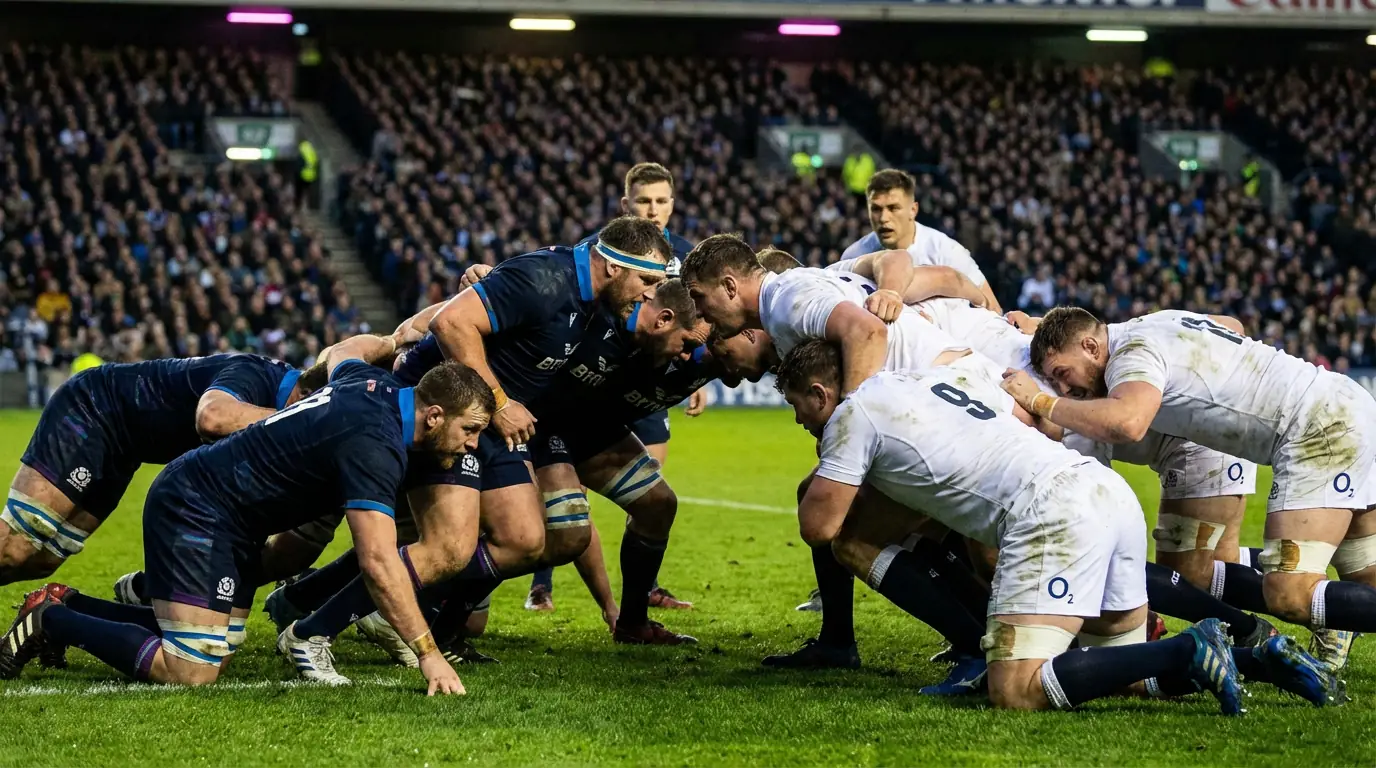
The other critical difference is the role of set pieces and territory. Knockout matches are won in the forwards, through scrum dominance, lineout accuracy, and the ability to control field position without the ball. Teams that rely heavily on counterattack and broken-field play — Fiji, Japan, to some extent France — often find their style neutralised by opponents who refuse to give them the unstructured possession they need. This has direct implications for handicap and totals betting: forward-dominant teams consistently outperform what their pool-stage margins would suggest in knockout contests.
Historical Patterns in World Cup Knockouts
Since the World Cup began in 1987, certain patterns have repeated with enough consistency to be actionable for bettors.
First, favourites win knockout matches at a higher rate than they win pool matches. This sounds counterintuitive — pool-stage results should be more predictable because of the wider quality gaps — but the explanation is straightforward. In the knockout phase, superior teams have more tools for managing close games: deeper benches, more experienced decision-makers, and better composure under pressure. The favourite’s edge is not larger in absolute terms; it is more reliable because the margin for error shrinks and the better team’s advantages become more decisive.
Second, underdogs tend to perform better on the handicap in knockout matches than in pool play. A team that lost by 30 in the pools might lose by only 10 in the quarter-final against the same opponent. The stakes compress the margin because the underdog fights harder, plays more conservatively to stay in the contest, and benefits from the favourite’s own conservatism. This is the paradox of knockout betting: the favourite wins more often, but the underdog covers the spread more often.
Third, scoring trends shift dramatically. Pool-stage matches at the 2023 World Cup averaged roughly 45 combined points. Knockout matches averaged closer to 35. The totals market adjusts for this, but it does not always adjust enough. If you see a quarter-final total lined at 42.5, the historical evidence suggests the under is the sharper play unless both teams are genuinely attack-first outfits — and in a knockout match, even attack-first teams tend to discover their inner pragmatist.
The Round of 16: What Changes With an Extra Knockout Round
The 2027 tournament introduces a structural novelty that has no direct precedent in World Cup betting history. The Round of 16 sits between pool play and the quarter-finals, and its character will be distinct from both.
Expect the Round of 16 to resemble pool play in terms of quality disparity but knockout play in terms of intensity. Pool winners will face third-place qualifiers or runners-up from other groups, which means the average skill gap in a Round-of-16 match will be wider than in a quarter-final but narrower than in a typical pool-stage mismatch. The key variable is motivation: both teams know elimination is on the line, so the conservative tendencies of knockout rugby will kick in regardless of the ranking gap.
For handicap bettors, this creates an interesting tension. The line might reflect a quality gap of, say, 15 points based on team ratings, but the knockout context will compress the actual margin. Backing the underdog on the handicap in the Round of 16 could prove to be a systematically profitable strategy if the market sets lines based primarily on team quality without adequately discounting the elimination-game compression effect.
The Round of 16 also adds a fatigue dimension. Teams that topped their pools will likely have managed their minutes more effectively — resting key players in dead rubbers, rotating their bench — while teams that scraped through in second or third place may have played their strongest XV in every pool match. The freshness gap compounds the quality gap and could make the Round of 16 more one-sided on the scoreboard than a typical knockout round. Monitoring cumulative minutes by team before placing Round-of-16 bets is not optional homework — it is essential.
Semi-Finals and Finals: Where Variance Collapses
As the tournament narrows, the quality gap between remaining teams shrinks toward zero. By the semi-finals, you are typically looking at four teams separated by marginal differences in execution, composure, and luck. The betting markets reflect this with tight handicap lines — often in the -1.5 to -5.5 range — and reduced totals.
Semi-finals are historically the tightest matches in the tournament. They combine the pressure of elimination with the fatigue of weeks of competition and the knowledge that a single match separates each team from the final. The tactical conservatism reaches its peak here. Coaches who gambled in the quarter-finals become risk-averse; players who ran expansive lines now kick for territory. The over/under on a World Cup semi-final is typically in the 35-40 point range, and the under has hit more often than not across the tournament’s history.
The final itself is an anomaly. It can go either way — the 2023 final was a tight, grinding affair, while the 2015 final was relatively open. The variable is whether both teams play to win or whether one team plays not to lose, and that dynamic is nearly impossible to predict from the outside. The final is often the hardest single match to bet profitably in the entire tournament, and the smartest move may be to enjoy it with a modest stake or no stake at all, having already captured your value in earlier rounds.
Practical Strategies for Knockout Betting
The most reliable knockout-stage strategy is systematic underdog handicap backing. The data supports it: underdogs cover the spread in World Cup knockout matches more often than the market prices suggest, because the elimination context compresses margins in ways the line does not fully capture. This does not mean you should blindly back every underdog — it means the default lean on any knockout handicap should be toward the plus side unless you have a specific reason to favour the favourite covering.
Totals unders are another consistent edge. The market typically sets knockout totals two to four points higher than the historical average because bettors have a natural bias toward overs — watching a high-scoring game is more exciting, and people bet what they want to see. Exploiting that bias by routinely taking the under in knockout matches is not glamorous, but it has been profitable across multiple World Cup cycles.
The Match That Ends the Tournament
Knockout betting rewards patience and discipline over instinct and excitement. The pool stage gives you data; the knockout stage gives you pressure, and pressure changes everything — the way teams play, the way markets price, and the way bettors behave. The punters who profit from the business end of the World Cup are the ones who recognise that a quarter-final between two evenly matched teams is not a scaled-up version of a pool match. It is a different sport played on the same field, and it demands a different approach to every bet you place. The bracket narrows. Your analysis should sharpen with it.
