

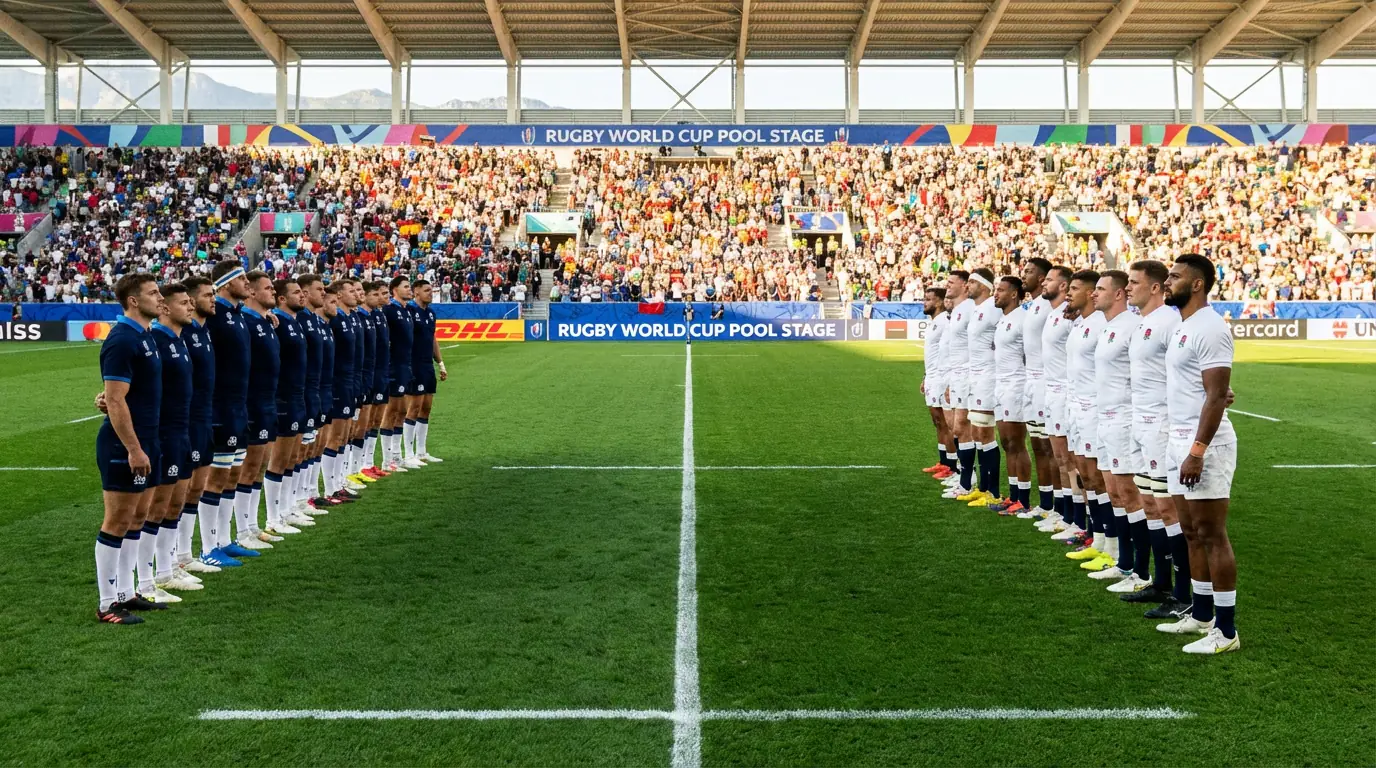
Pool winner betting is one of the most underappreciated markets in World Cup rugby. While the majority of betting volume concentrates on the outright winner and individual match results, the pool markets offer something that outright bets cannot: a shorter time horizon with a clearer analytical framework. You are not trying to predict who will win seven consecutive matches over two months. You are predicting the hierarchy within a group of four or five teams across a handful of fixtures. The variables are more contained, the data more relevant, and the edges more accessible.
The 2027 World Cup’s expanded format — 24 teams divided into pools, with a new Round of 16 — reshapes the pool stage in ways that create fresh betting angles. More teams mean more pools, more matches, and more opportunities for both favourites and underdogs to generate results that move the market. Understanding how the draw works and where the early value lies is essential for anyone serious about World Cup pool betting.
Pool winner predictions on rugby world cup betting.
The 2027 Format and What It Means for Pool Markets
The expansion to 24 teams is the most significant structural change to the World Cup since the tournament moved to 20 teams in 1999. The precise pool composition will not be finalised until the qualification process completes and the draw takes place, but the framework is clear: pools will contain a mix of seeded tier-one nations and qualifiers, with the top teams from each pool advancing to the knockout round.
This format change has three critical implications for pool betting. First, the presence of a Round of 16 means that finishing first versus second in your pool matters less for qualification — both advance — but matters enormously for the draw in the elimination rounds. A pool winner is likely to face a weaker opponent in the first knockout round, while a runner-up may draw one of the tournament heavyweights. This means tier-one teams have genuine incentive to win their pools rather than simply qualify, which reduces the likelihood of dead-rubber rotation in the final pool fixtures.
Second, the expanded field means more qualifiers and lower-ranked teams in each pool, which should increase the predictability of pool outcomes at the top end. The gap between the traditional top eight nations and the rest of the world remains substantial in rugby union, and while upsets will happen, the probability of a tier-one team failing to win a pool that includes two qualifiers is very low. This predictability is the foundation of a pool-winner accumulator strategy — combining several short-priced pool winners into a multiple that offers an attractive collective return.
Third, the new format creates more complexity in the middle of the pools. The battle for second place — and a knockout-round berth — becomes the most compelling and most volatile betting market in the group stage. Teams ranked between eighth and sixteenth in the world will fight for these spots, and the margins between them are thin enough that genuine uncertainty exists. For bettors, the qualification markets and second-place finishers may offer better value than the pool-winner markets, where the heavy favourites are priced accordingly.
Early Pool Analysis and Seeding Scenarios
Although the final draw has not taken place at the time of writing, the seeding bands for 2027 can be projected with reasonable confidence based on current world rankings and qualification pathways. The top seeds — New Zealand, South Africa, France, Ireland, England, and Australia as hosts — will be distributed across the pools, ensuring each group has at least one heavyweight. The second band of seeds typically includes teams like Scotland, Argentina, Japan, and Wales, each capable of causing problems but unlikely to top a pool containing a genuine tier-one contender.
The value in pool-winner markets depends heavily on the specific draw. A pool containing South Africa and Argentina presents a very different betting landscape than one with South Africa and Tonga. Bettors should wait for the draw before committing significant stakes, but the pre-draw futures markets can offer inflated odds if you are willing to accept the uncertainty. Backing a team like New Zealand to win their pool before the draw is priced is essentially betting that the All Blacks will beat whoever they are grouped with — and given their depth of squad, that is a proposition with a high probability of success regardless of the draw outcome.
The pools to watch most closely will be those where two strong tier-two nations are drawn together. A pool containing, say, Japan and Fiji alongside a seeded team creates a three-way contest for two qualification spots that generates enormous betting interest and genuine unpredictability.
Qualification Scenarios and Market Dynamics
The most profitable pool betting often comes not from backing the outright pool winner but from exploiting the qualification scenarios that emerge as matches are played. After the first round of pool fixtures, the market adjusts rapidly. A team that wins its opening match comfortably sees its odds shorten dramatically, while a team that loses or underperforms sees its price drift. These in-tournament adjustments create opportunities for bettors who assessed the pools correctly before the tournament began.
Consider a common scenario: a tier-one favourite wins their first two pool matches, mathematically securing at least a qualification spot and very likely the pool. Their final pool match becomes a contest where the favourite may rotate players, and the opponent is playing for survival. The pool-winner market for that favourite is now priced at prohibitive odds — perhaps 1.02 or 1.03 — offering no value whatsoever. But the qualification market for the teams fighting over the remaining spots in that pool may have shifted in ways that create genuine mispricing, especially if results elsewhere in the pool have produced unexpected outcomes.
The lesson is that pool betting is not a single decision made before the tournament. It is a dynamic process that requires monitoring results, recalculating probabilities, and acting when the market lags behind reality. The bettors who treat pool markets as a one-and-done pre-tournament wager will miss the best opportunities, which almost always arise during the pool stage itself as new information reshapes the competitive landscape.
Bonus point systems add another dimension. In World Cup pool play, teams receive a bonus point for scoring four or more tries and a losing bonus point for defeats by seven points or fewer. These bonus points can determine pool standings when teams finish level on wins, making the try-scoring incentive a genuine factor in late pool-stage matches. A team needing a bonus point to secure qualification or top the pool will approach the match with attacking intent, which influences both the match result and the totals markets. Smart pool bettors track the bonus point calculations obsessively — they are the hidden variable that casual punters routinely ignore.
Where to Find Value Before the Draw
Pre-draw pool betting is a niche market that most recreational bettors overlook, but it can offer genuine value for those willing to think probabilistically. The concept is straightforward: bookmakers offer odds on teams to win their pool before the pool composition is known. These odds reflect an average expectation across all possible draw outcomes, which means they are inherently blunt.
The value lies in identifying teams whose pool-winning probability is relatively insensitive to the draw. New Zealand, for example, are likely to be one of the top seeds and will face a pool calibrated to include one strong and two weaker opponents. Their probability of topping that pool is high regardless of the specific composition, which means the pre-draw odds may slightly undervalue their chances because the bookmaker must account for worst-case draw scenarios that are, in reality, very unlikely.
Conversely, teams in the second seeding band — Scotland, Argentina, Japan — have pre-draw pool-winner odds that are far more sensitive to the draw outcome. Argentina in a pool with New Zealand is a fundamentally different proposition than Argentina in a pool with Australia. Backing these teams pre-draw is a higher-variance bet because you are accepting significant draw-dependent uncertainty.
The pragmatic approach for most bettors is to identify two or three top-seeded teams whose pool-winner odds look favourable on a pre-draw basis and take a small position. Then, once the draw is announced, reassess the market and add positions where the specific pool composition has created value that the pre-draw odds did not anticipate. This two-stage approach captures value at both points in the market’s development without overcommitting to either.
The Pool Nobody Wants to Be In
Every World Cup produces a so-called “pool of death” — a group where the draw has conspired to place multiple strong teams together, guaranteeing that at least one quality side will be eliminated before the knockout round even begins. For pool bettors, the pool of death is simultaneously the most dangerous and the most rewarding market.
See also our 2027 predictions page.
It is dangerous because the outcomes are genuinely uncertain and the margins between contenders are razor-thin. But it is rewarding because the uncertainty produces longer odds on every team in the pool, including teams that would be heavy favourites in a more forgiving group. If you can identify which team in the pool of death has the best schedule, the most favourable matchup sequence, or a psychological edge over their rivals, the odds available for a pool-winner or qualification bet can return multiples of what the same team would offer in a standard group. The pool of death is where analytical bettors earn their biggest returns — and where gut-feel punters lose theirs.
